From dead zones to lifelines: Cherokee Nation’s broadband expansion boosts health, education | Solutions Stories

TAHLEQUAH – The Cherokee Nation is spending millions on infrastructure to expand internet and cell coverage within the reservation, a move that not only lifts educational outcomes but lowers suicide rates, according to clinical studies.
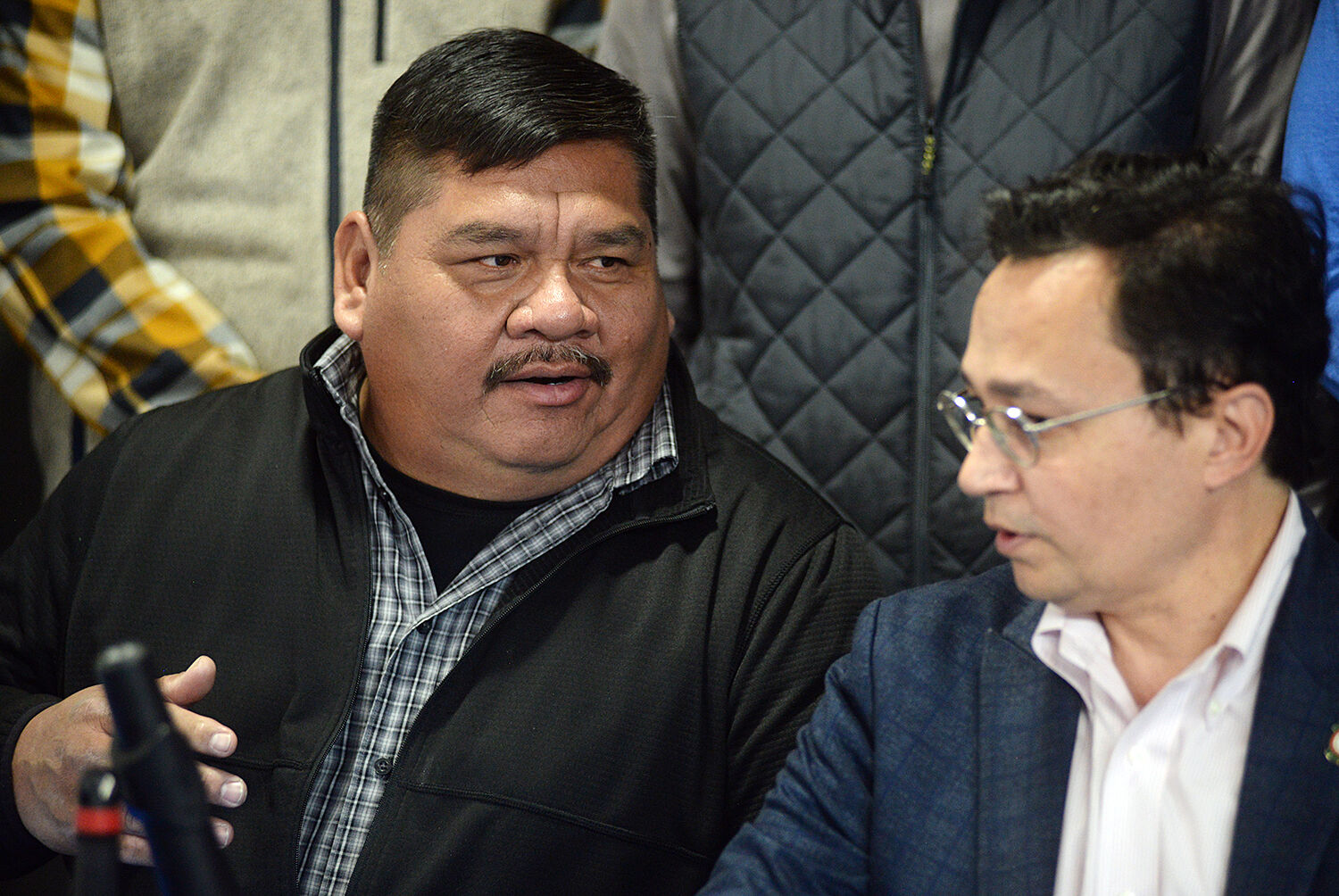
Joe “Mouse” Chewey, chairman of the CC Camp Community Organization, thanks Cherokee Nation Principal Chief Chuck Hoskin Jr. and his administration on Dec. 18, 2024, for their new initiative to build cellular towers in rural areas.
“If our Cherokee communities are to thrive in the 21st Century, they cannot be left behind when it comes to cell service and high-speed internet,” Principal Chief Chuck Hoskin Jr. said. “In recent years, it has become all too clear that many Cherokee families in our rural communities lack access to internet service or the ability to make a call from their cell phones, and that is not acceptable on our watch because we now have the means to do something about it.”
Under the tribe’s Cherokee Connect Broadband Initiative passed in late 2024, an estimated $45 million is earmarked for construction of 15 cell towers to serve rural areas and thousands of households, an effort expected to be finished by summer 2026. The tribe stepped up because national and statewide investments into high-speed internet and cellular service “hadn’t reached this area,” Hoskin said.
“I think we have to, as Cherokee people, understand that we have to take care of Cherokee communities when we have resources to do it and not wait around,” he added.
Towers will be in the communities of Belfonte, Bell/CC Camp, Brent, Brushy, Chewey, Christie, Dry Creek, Eucha, Greasy, Marble City, Oak Hill/Piney, Oaks, Proctor, Tailholt and Vian. The Cherokee Nation had already completed a tower in the rural community of Kenwood.
“A few years ago, COVID-19 highlighted the critical connectivity needs for Cherokee communities across portions of the Cherokee Nation Reservation, particularly those where high numbers of Cherokee speakers reside,” Hoskin said. “Installation of a cell tower in the Cherokee community of Kenwood in 2023 has proven to be a model for overcoming these barriers, and it is a model worthy of repeating.”
A ceremony to mark the initiative for 15 more towers was held in Adair County’s Bell community, known to many as a “dead spot” for cellular service.
“It’s exciting,” CC Camp Community Organization chairman Joe “Mouse” Chewey said. “Residents will be able to talk to one another instead of having to travel all over the mountain or through the holler and through the valley. They can connect. It is a game-changer. I can’t wait to get these Cherokees connected.”
CONNECTIVITY AND SUICIDE RATES
According to the national Centers for Disease Control and Prevention, internet access and other social conditions play a role in a community’s suicide risk.
A fall 2024 report released during National Suicide Prevention Month indicates that counties with broadband internet, higher health insurance coverage and household income have lower suicide rates. The “vital signs” report reveals that rates were 44% lower in counties where most homes have broadband internet access, which offers better access to employment, economic opportunities, connection with loved ones and tele-health.
“Suicide rates have increased during the last 20 years and remain high,” the CDC says. “Tragically, more than 49,000 people died by suicide in 2022, and provisional data indicate a similar number of people died by suicide in 2023.”
The government places suicide as the second leading cause of death among people ages 10-34. American Indians and Alaska Natives “continue to have high rates” at 27.1 per 100,000 people, the CDC says.
“Some of these groups, such as (American Indian/Alaska Native) persons, are more likely to live in communities with lower levels of these factors, including broadband Internet access,” the report states. “Decision-makers, government agencies and communities can work together to implement programs, practices and policies that increase access to health insurance and broadband internet and promote economic supports.”
The Cherokee Nation’s connectivity efforts will offer additional educational opportunities, access to human services and housing, “services that might be based in more populated communities,” District 8 Tribal Councilor Codey Poindexter said.
“We want to make sure everyone is included, especially our Cherokee elders and our kids,” he said.
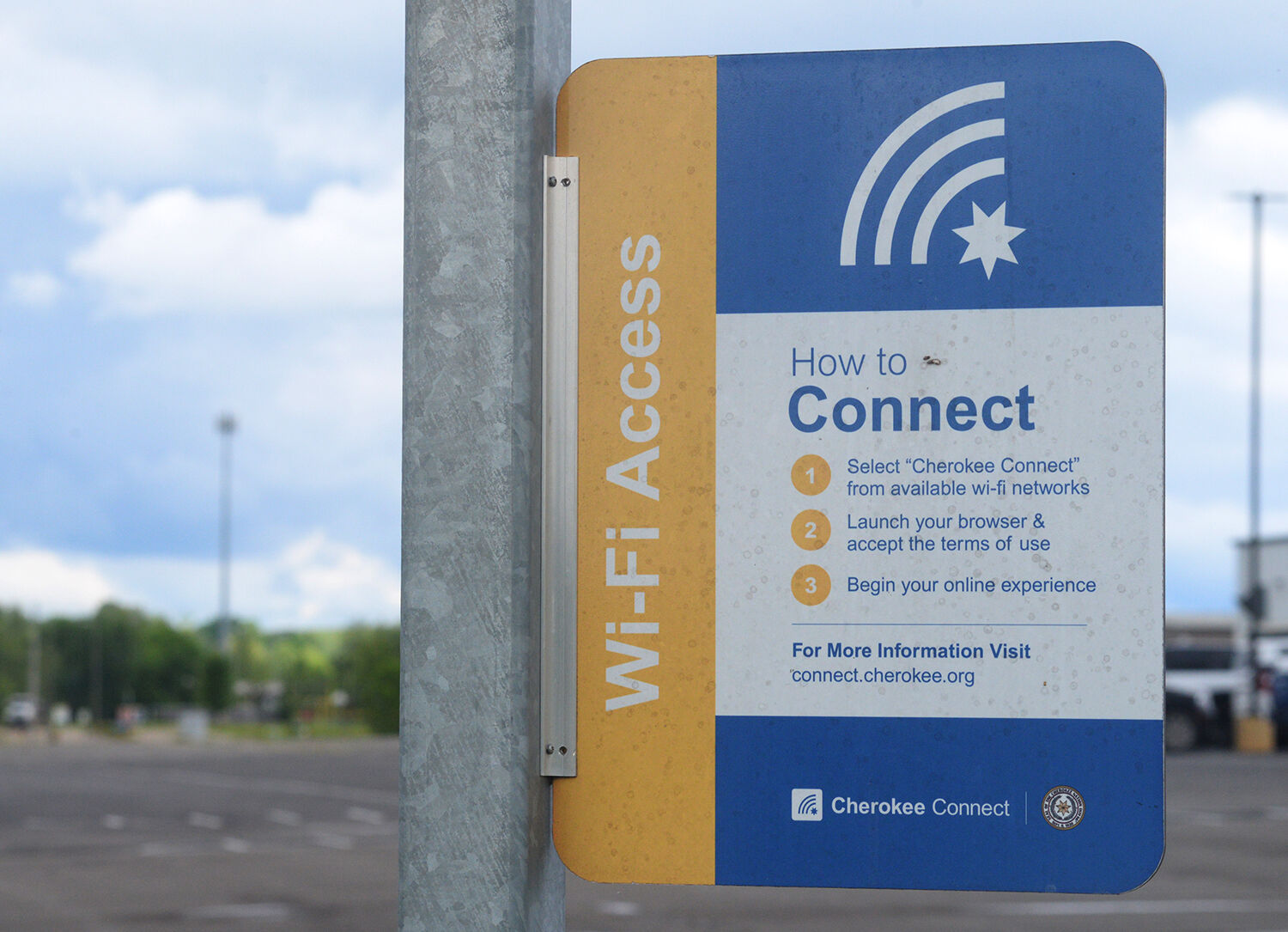
One of the Cherokee Nation’s 30-plus wi-fi zones is seen May 8 in Tahlequah. The technology allows CN citizens to drive up within 100 feet of the signage, remain in their vehicles and connect to the internet for free.
THE DIGITAL DIVIDE AND EDUCATION
Tribal leaders say a digital divide has “plagued Indian Country and the Cherokee Nation far too long,” prompting several reservation-wide efforts to boost internet access over the past several years.
The Cherokee Connect Broadband Initiative builds upon the tribe’s COVID-era Respond, Recover, Rebuild Mobile Hotspot Connectivity Assistance Program that provided nearly 11,000 hotspot devices to Cherokee households lacking internet. Distribution of the AT&T-powered devices was focused on providing connectivity to elders who needed access to tele-health and students.
When that service was rolled out in 2021, Chewey Community Center president Steve Sands noted that, “Most of our kids live up the river, which is a dead zone.”
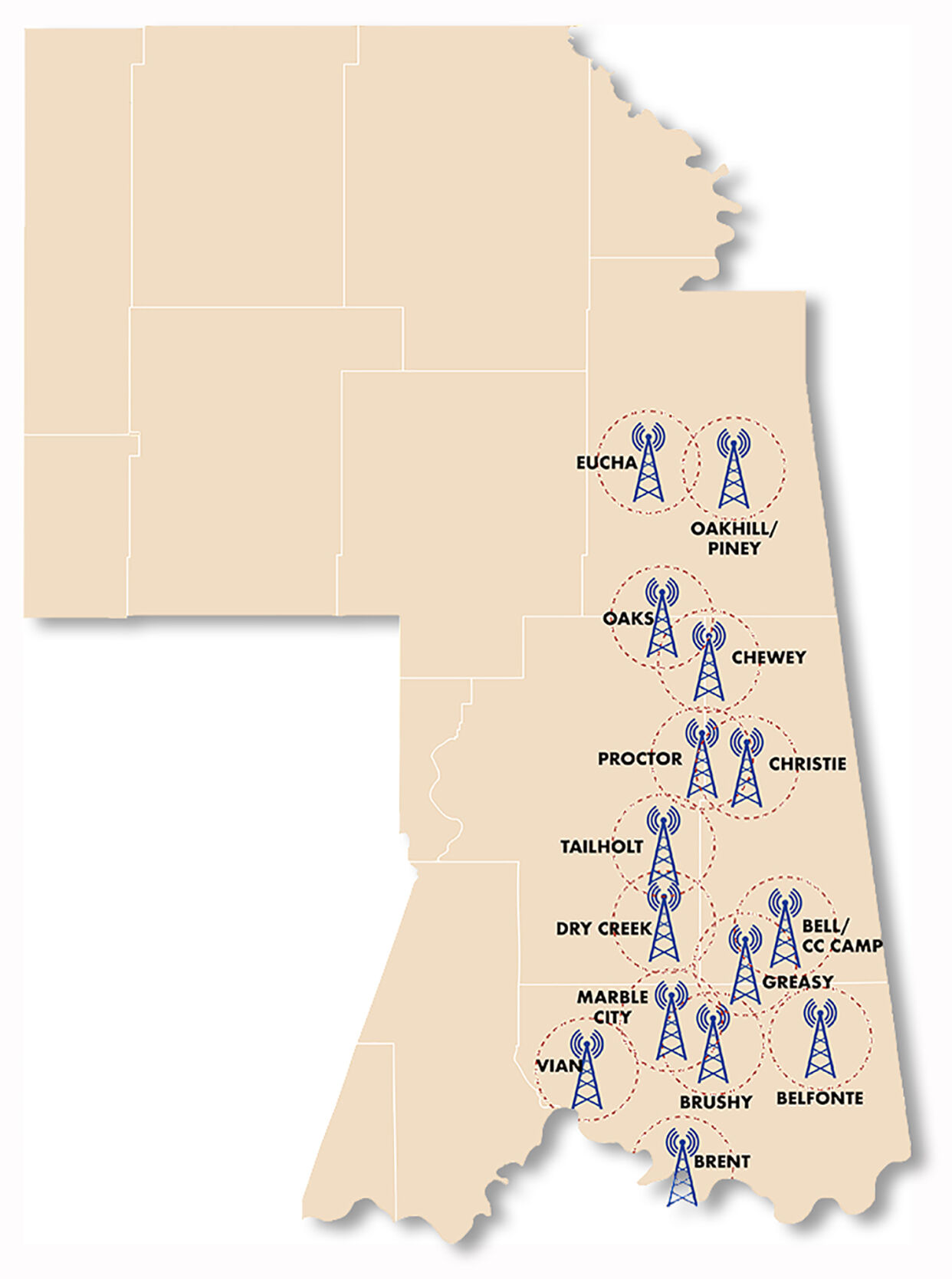
Through the tribe’s Cherokee Connect Broadband Initiative, the Cherokee Nation is planning to build 15 cell towers to serve rural areas. Towers will be in the communities of Belfonte, Bell/CC Camp, Brent, Brushy, Chewey, Christie, Dry Creek, Eucha, Greasy, Marble City, Oak Hill/Piney, Oaks, Proctor, Tailholt and Vian.
“There are kids who have never been on the internet at home their entire lives,” he added. “Now, they can come here and use the wi-fi, and see what everyone is doing or stay engaged, and their parents can use it while their kids play.”
According to the Pew Research Center, 96% of teenagers use the internet every day. The ACT Center for Equity in Learning says that access to technology “is essential to educational success, as well as workforce and community development,” but geographical, income-based and racial-ethnic disparities persist.
A “digital divide” in education, according to the center, is described as the gap between those with sufficient knowledge of and access to technology and those without. Closing that gap leads to improved educational outcomes, a prospect that excites the Cherokee Nation’s deputy chief, Bryan Warner, a champion for education and former educator himself.
“In Indian Country, there are three main barriers to good education,” he said. “A lot of times that is transportation, that’s food security and the other is the digital divide. This broadband effort we’re making is going to be paramount to the future of all our tribal citizens, but especially those young individuals. This brings me great happiness to be able to be a part of bridging that gap.”
The Cherokee Nation also opened a digital learning center in Catoosa to help bring internet service to the community and offers wi-fi zones at 35 locations throughout the reservation.
“These connectivity locations are meant to protect those needing public wi-fi by keeping them in the privacy of their own vehicle,” the tribe says. “No matter which location you visit, getting connected is easy.”
The self-contained, wireless-driven Cherokee Connect technology allows CN citizens to drive up within 100 feet of the signage, remain in their vehicles and connect to the internet. For more information, visit connect.cherokee.org.
This story has been supported by the Solutions Journalism Network, a nonprofit organization dedicated to rigorous and compelling reporting about responses to social problems. For more information, visit solutionsjournalism.org.
Editor’s Note: In 2024, the Cherokee Phoenix was selected to participate in two separate Solutions Journalism Network initiatives. The Health Equity Initiative was a partnership through SJN and the Indigenous Journalism Association. The Climate Beacon Newsroom Initiative focused on training newsrooms on visuals in order to enhance newsrooms’ solutions journalism reporting. Utilizing training and grant funding from both initiatives, the Cherokee Phoenix is further serving Cherokee Nation citizens and its readers through a series of solutions journalism stories, “ᎪᎷᏩᏛᏓ ᎧᏃᎮᎸᏍᎩ” or “Goluwadvda Kanohelvsgi,” which translates to solution story in English. Solutions journalism is a rigorous, evidence-based approach to reporting that focuses on responses to social problems rather than solely highlighting the problems themselves. Unlike traditional news, which often emphasizes conflict or failure, solutions journalism explores how individuals, organizations and communities address challenges in innovative and effective ways. This approach involves investigating the implementation, impact and limitations of these solutions, ensuring they are accurately portrayed without overhyping results. By offering a more complete view of societal issues, solutions journalism empowers audiences with actionable insights and fosters constructive dialogue. It aims to inspire change, encourage accountability and provide a balanced narrative that counters negativity bias, helping readers see the potential for progress and understand what works, where and why, in addressing complex issues. For questions or ideas, email [email protected].
link