


Lisa Walters of Greenville has an annual email in her inbox from BlueCross BlueShield of South Carolina. It will tell her how much her premiums are going to be next year for the health insurance she receives through the Affordable Care Act.
She is afraid to open it after hearing of massive spikes in prices.
“I haven’t looked yet,” said Walters, 52. “To tell the truth, I’ve got to wait until I can handle the anxiety.”
She is among the more than 600,000 people in South Carolina who get their health insurance through what is commonly called Obamacare. Nearly all of them (97 percent) get enhanced subsidies to help them pay for it. But those subsidies are set to go away at the beginning of next year — BlueCross and other insurers have a substantial hike in premiums, in part, because of that — and the state’s patients and health care providers are about to take a substantial hit.
South Carolina doctors and hospitals could see more than $1 billion in losses if those subsidies are not extended, with more than 300,000 dropping coverage and nearly 200,000 becoming uninsured, different analyses show.
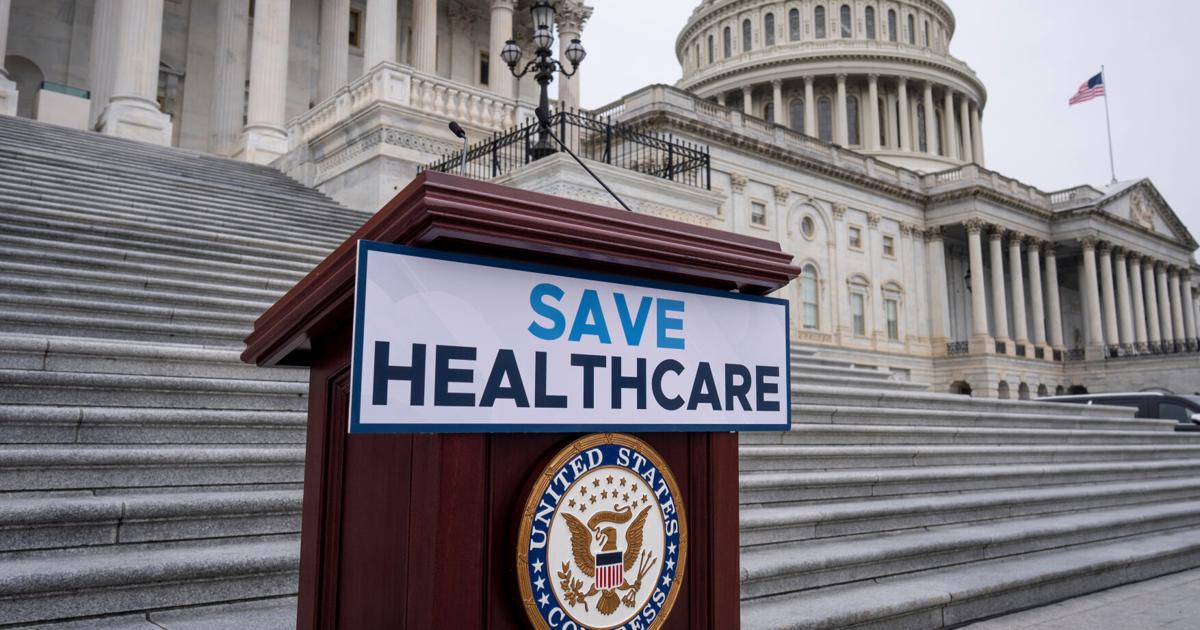
The Enhanced Premium Tax Credits enacted in 2021 will stop at the end of this year. Extending those tax credits has become a battle cry for congressional Democrats and is a key sticking point that has led to the ongoing federal government shutdown. President Trump and Republicans insist they will not discuss extending those tax credits until the other side agrees to vote for a continuing resolution to reopen the government, which has prolonged the stalemate. Open enrollment for ACA coverage begins Nov. 1 for most states.
Premiums skyrocket
Losing that subsidy help would come on top of premium increases next year from insurance companies that are hiking rates partly because they expect the subsidies will go away and increase their costs, said Sara Collins, senior scholar at the nonprofit Commonwealth Fund. In 2026, it will be the third year in a row that insurance companies are seeing an increase in medical costs regardless of what happens to the subsidies, and it is affecting both employer-based and ACA plans. The median premium increase will be 18 percent across all insurance companies, said Justin Giovanelli of the Center on Health Insurance Reforms at Georgetown University.
“That’s the largest increase we’ve seen since 2018,” he said.
The expiration of the subsidies, and the subsequent spike in premiums for those on the ACA plans, are part of that calculation. For those earning less than 250 percent of the Federal Poverty Level, which is $80,375 for a family of four, monthly premiums will more than quadruple, from $169 a month to $919 on average, Collins said. Many healthier people will likely drop coverage because they can no longer afford or consider it worthwhile, but sicker people with higher medical bills may stick with it, she said. Insurance companies expect to face higher medical bills and more risk for costs spread across fewer people, which accounts for anywhere from 1 to 14 percent of that 18-percent increase in premiums, according to different analyses.
For Walters and her husband, David, it is even more stark. Their $1,531 monthly premium was covered by the enhanced subsidy due to their income, she said. Now, after opening the dreaded email, Walters learned they would be facing that full amount, which was unthinkable and unaffordable, Walters said.
But David just got a new job with Prisma Health and with it — “Thank you, Jesus” — comes health insurance, she said. Her daughter, Nicole Bateman, is not so fortunate. Her premium would go from $178 to $434 each month. That $250 increase is unaffordable for her daughter, Walters said.
“She’s going to be pulling pennies out of the sofa” to pay for that, Walters said. Instead, she plans to drop that coverage and accept a high-deductible plan offered through her employer, a plan similar to catastrophic coverage that previously was not very appealing.
South Carolina advocates did a “yeoman’s job of getting people health care” once they enhanced premiums became available and they could then afford it, said Sue Berkowitz, founder/director of policy for South Carolina Appleseed Legal Justice Center. That accounts for the heavier impact the state will feel when they go away and people lose that coverage, she said.
“They’re not going to be able to stay on,” Berkowitz said. “They’re they’re not going to have that money in their pockets to be able to do it.”
Cost of care
It is not just patients in South Carolina that will suffer. Health care providers in the Palmetto State are projected to lose $1.5 billion next year in reduced payments and increased uncompensated care, according to an analysis from The Urban Institute. South Carolina providers are facing a 27 percent increase in the uncompensated care — the second highest increase, behind only Mississippi — of $265 million, the analysis found.
That there could be many newly uninsured next year needing more services is “on the radar,” said Renee Linyard-Gary, assistant vice president for community health at Roper St. Francis Healthcare in Charleston. Roper has Greer Transitions Clinic to treat the uninsured and underinsured as well as other services, but other safety net programs, like Community Health Centers, Federally Qualified Health Centers and free clinics “will be utilized even more to address the needs of the newly uninsured,” she said. “And I would also say I can see a greater reliance on health navigation as well.”
Many of those newly uninsured may not be aware of the services out there and might show up at an emergency room looking for basic services. Access Health Tri-County network, a collaborative program of providers in Charleston, Berkeley and Dorchester counties, already helps uninsured patients in the Lowcountry find services, Linyard-Gary said. It is one of 11 Access Health programs in South Carolina funded by the Duke Endowment and supported by the South Carolina Hospital Association.
Roper also has mobile health clinics it conducts to help meet community needs, Linyward-Gary said.
Whether all of those services can ramp up to meet the estimated need is something still to be determined, she said.
“We can see more patients, but to that volume, that’s something that would need to be looked into further,” Linyard-Gary said.
Berkowitz, whose son works in an ER in the Columbia area, said people are already waiting hours to be seen there. When there are even more coming to all of the safety net providers, “it’s going to be devastating,” she said.
link