


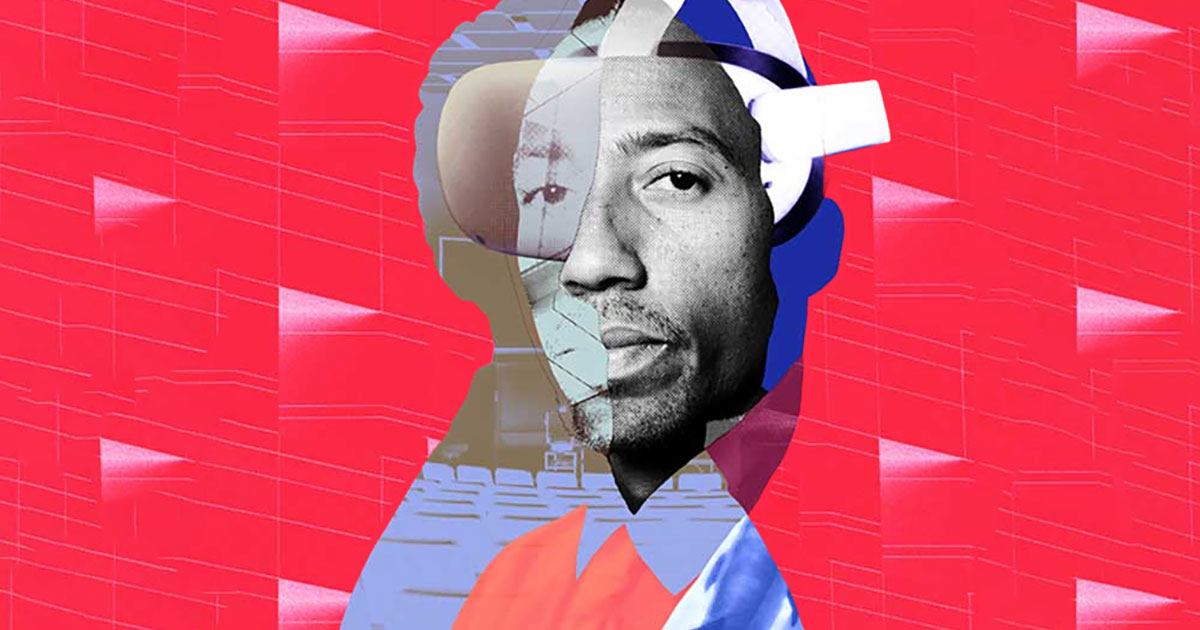
Julio Silvestre, MD, is a practicing palliative care physician who was trained in Bolivia. After further training in internal medicine, palliative care, geriatrics and oncologic emergencies in the United States, Silvestre enrolled in HSU’s Master of Science in Health Systems program to pursue his passion for accelerating the translation of research into clinical practice. He’s particularly interested in addressing the often overlooked disconnect between medical discovery and real-world application.
“Clinical trials are published all the time, but there’s a major gap between when a study is published and when those results are put into practice,” Silvestre said.
The Master of Science in Health Systems program trains learners to expedite the implementation of scientific discovery in the clinic.
HSU curates its curricula to meet the demands of a changing healthcare landscape and its shifting priorities. And just as Cedars-Sinai clinicians prioritize patient-centered care, all HSU programs emphasize a learner-centered philosophy. Flexible programming accommodates professionals’ busy schedules.
“Some of our learners are full-time clinicians, while others are traditional graduate students,” said Joshua Goldhaber, MD, vice dean of graduate education and the Dorothy and E. Phillip Lyon Chair in Laser Research at Cedars-Sinai. “Our programs are customized to fit their lives and provide exactly what our educators think the students need to be successful in their careers as scientists or healthcare providers.”
Faculty facilitate learning by teaching students how to problem solve and devise concrete solutions for medicine’s most vexing problems. Then they provide them with the scaffolding to make their visions a reality.
“The reasoning that leads to creative solutions is a learned skill,” said Graciela Gonzalez-Hernandez, PhD, director of the graduate programs in artificial intelligence at HSU. “Our goal is to cultivate learners who are not only knowledgeable but also creative, collaborative and adaptable.”
HSU master’s degree and PhD candidates work alongside professors who are among the foremost scientists in their fields on disease-focused research projects that aim to change patients’ experiences now and not years down the line.
“Our faculty advisers are the best in their fields,” Silvestre said. “Every time they give us an assignment, they’re not just teaching by theory. They’ve already walked the path.”
Graduate learners work on open-ended projects aimed at solving real-world healthcare problems. Many co-author papers presenting their findings in peer-reviewed journals.
Within his studies, Silvestre is contributing critical research to the burgeoning field of palliative care and devising research projects that address an underrecognized facet of medicine: comfort. As a practicing palliative care physician at Cedars-Sinai, he’s especially interested in optimizing the use of pain medications and managing complex symptoms, such as intractable pain syndromes, shortness of breath, mood issues and fatigue.
“We’re asking patients what matters most to them when facing a life-limiting illness such as cancer,” Silvestre said. “Then we’re folding those findings into the work we do in the clinic.”
link