


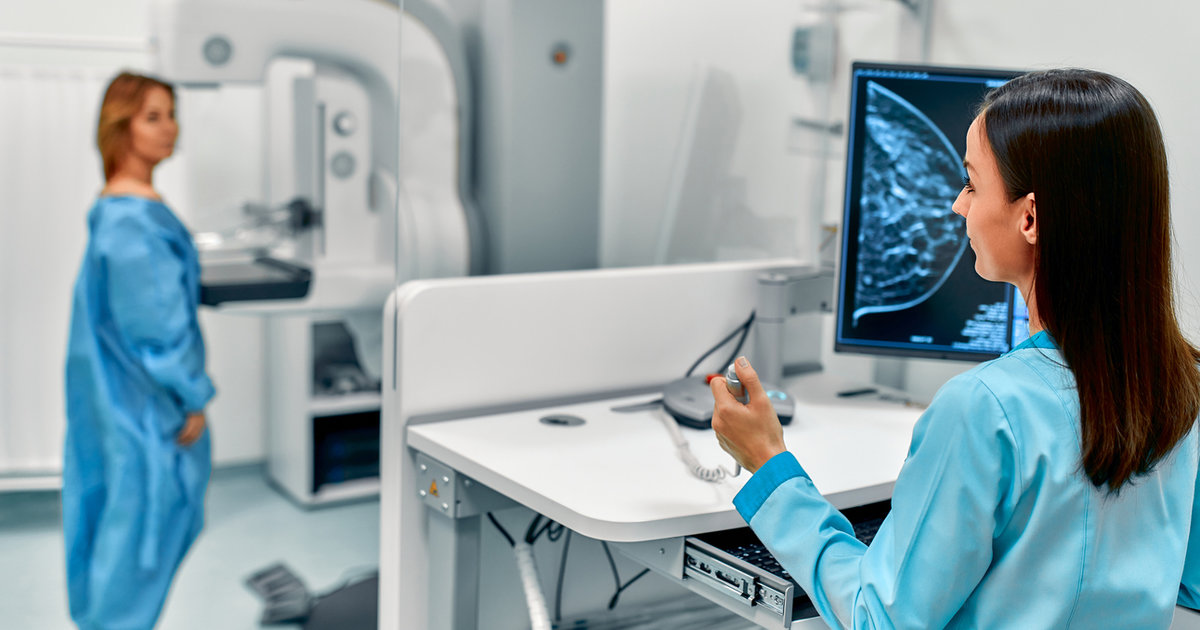
A Texas health system has identified some of the key drivers of poor breast imaging quality, sharing ways in which it’s addressing these challenges.
Screening mammography plays a pivotal role in catching cancer early. However, several factors can cause substandard imaging, with poor patient positioning a “leading contributor,” experts wrote Monday in JACR.
To address this, Parkland Health and Hospital System, Dallas, created a “structured improvement process,” aiming to increase the proportion of mammograms meeting established patient positioning criteria.
“Overall, we showed significant quality improvement in screening mammography positioning in a large [safety-net health system] breast imaging center,” Firouzeh K. Arjmandi, MD, assistant quality assurance medical director, Parkland Radiology, and co-authors concluded. “As we performed process-mapping for our center, we were able to identify key areas contributing to poor image quality and implement specific interventions to address them. Monitoring of mammographic positioning through audits will be ongoing, such that we can continue to seek ways to improve image quality and address the impact of staffing challenges and increasing patient volumes.”
Parkland conducted the project in partnership with the American College of Radiology Learning Network. Its team consisted of two radiologist leaders, a quality improvement coach, and mammography-certified technologists, among others. They used an “A3 thinking” process, seeking to improve mammography positioning from an average baseline of 45% meeting quality criteria up to 85% by June of 2024. Arijmandi and colleagues collected data and identified root causes of poor image quality, along with key drivers for improvement.
The most common staff-related factors contributing to poor image quality included variable technologist training and skill level, inconsistent onboarding and training of techs, “constant” turnover among this team, and a high number of unfilled positions. Meanwhile, factors relating to patients included the large volume of non-English speaking subjects, “challenging patient body habitus,” and mobility issues. Technologists noted that the lack of a full-time, in-person Spanish interpreter at the main breast imaging site was making it difficult for their team to communicate with subjects. About 62% of patients said they spoke a primary language other than English, with 96% citing Spanish as their preference, the study found.
Interventions implemented included daily positioning tips and discussion of three top criteria during daily huddles (inadequate inframammary fold, insufficient pectoralis major muscle and sagging breasts), alongside rounding with and mentoring techs who had lower scores. Radiologists gave two lectures on the minor and major criteria and the importance of positioning, sharing multiple examples of images. The team leader and senior technologists with higher scores also worked on-on-one with underachieving techs, helping improve their positioning skills. During daily huddles, team leaders shared examples of high-quality mammograms, making sure to recognize high-performing techs.
On the patient side, Arjmandi and colleagues reviewed scheduling templates and adjusted to reflect staffing challenges and account for the 25% no-show rate at the primary breast center. This template was periodically modified “on days with less available staff to optimize patient care.” Technologists also were trained on basic Spanish mammography terms for positioning and provided with a document detailing instructions in the language. Team members additionally designed a picture book with positioning tips to assist techs, and Parkland requested a full-time Spanish interpreter for the main imaging center (a request that had not been approved at the time of the study).
The health system achieved an increase from baseline of 45% meeting mammography positioning criteria up to 75%. While they fell short of the 85% goal, this 30 percentage-point uptick in the last seven weeks was an “impactful and important outcome” for Parkland’s breast imaging center.
“We developed a plan to sustain our improvements with continued emphasis on maintaining and improving image quality,” the authors reported. “This plan includes continued sharing of positioning tips by the team leader and lead technologist in daily huddles. Our team of technologists has also been asked to select their own challenging cases with helpful tips, which will be discussed once per week, while radiologists continue to perform monthly audits. Furthermore, the sustain plan includes reviewing image quality outcomes quarterly with each team member during a one-on-one meeting with the team leader.”
Read much more, including potential study limitations, in the Journal of the American College of Radiology.
link