


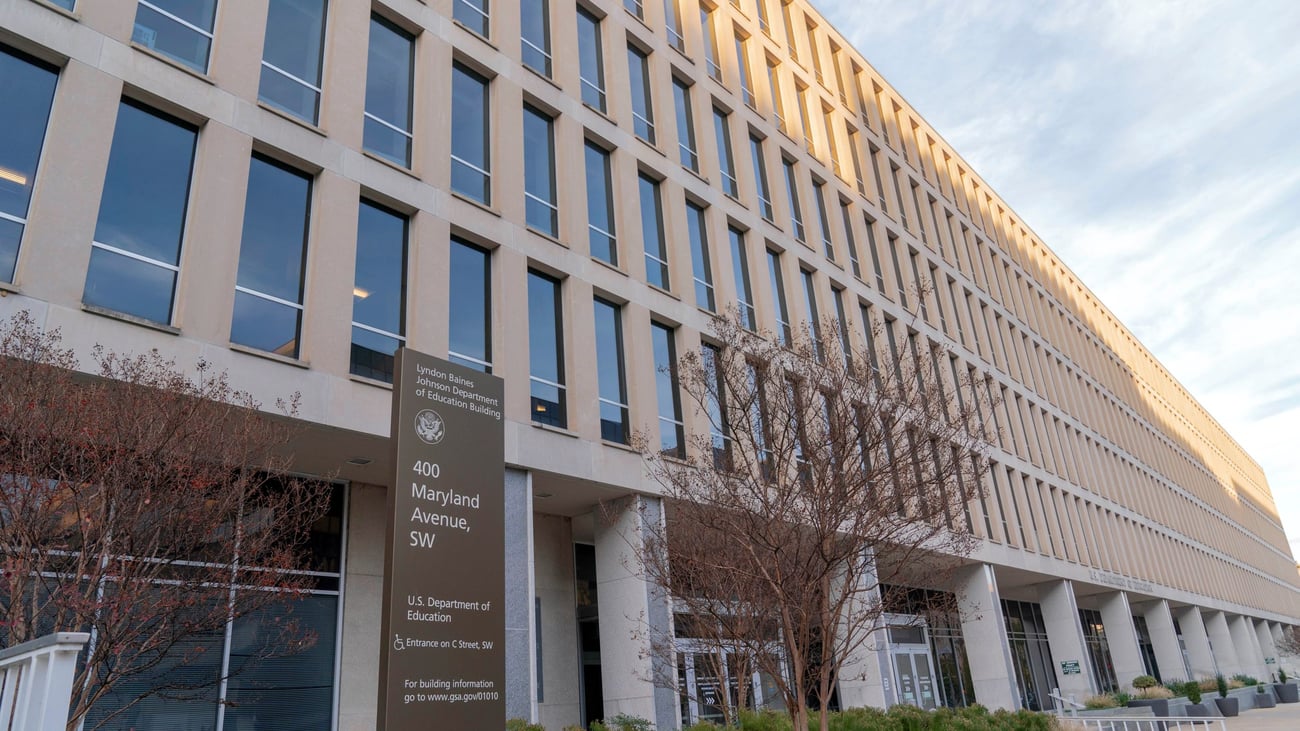
In February, the Trump administration attempted to abruptly discontinue $1 billion in mental health funding to schools across 16 states.
(CN) — A federal judge delivered a sharp rebuke to the Department of Education on Friday, ruling that its attempt to cancel roughly $1 billion in school mental health grants was unlawful and ordering the funds reinstated.
U.S. District Judge Kymberly Evanson found that the department acted arbitrarily when it moved to discontinue grants supporting mental health professionals in schools across 16 states, including Washington state, where the suit was filed.
The programs were established by Congress after mass shootings in Parkland, Florida, and Uvalde, Texas, and were designed to address a critical shortage of counselors, psychologists and social workers in American schools.
The Joe Biden nominee granted summary judgment to the states and issued a permanent injunction blocking the department from enforcing its cancellation decisions. The ruling means that school districts that had been preparing for an abrupt end to federal funding on Dec. 31 can now continue their mental health programs.
“The court has found serious, fundamental errors in the department’s directive procedure that led to unlawful discontinuation of the grants at issue, and also found that those actions caused significant disruption to plaintiff states. Allowing the discontinuation decisions to remain in place would be far more disruptive than setting them aside to allow the department to make lawful continuation determinations,” Evanson wrote.
The case focused on two grant programs: the Mental Health Professional Demonstration Grant Program and the School-Based Mental Health Services Grant Program. Both received steadily increasing appropriations from Congress over several years.
In February, the Education Department issued what it called a “Directive on Grant Priorities,” announcing it would review all existing grants based on the current administration’s policy preferences. By April, most grant recipients in the plaintiff states received notices that their funding would be terminated.
Evanson found multiple violations of the Administrative Procedure Act in the department’s actions. The discontinuation notices, she determined, did not provide explanations for why each grant was being canceled.
“Here, it is undisputed that the discontinuation notices merely referenced a list of political principles and stated, in conclusory fashion, that the grant contravened one or more of the preferences listed, without even identifying which principle it violated,” Evanson wrote. “In the absence of any findings in the notices themselves, the court cannot determine whether the department’s conclusions bear a rational connection to the facts.”
The judge was particularly critical of the department’s failure to follow its own regulations governing multi-year grants. Under those rules, continuation funding decisions must be based on grantees’ performance, fiscal and management reports — not on whether programs align with a new administration’s political priorities.
“The continuation decisions were based on unpublished policy preferences set forth in the directive procedure, rather than on information enumerated in 34 C.F.R. § 75.253 or similar relevant information,” she said. “Thus, the department acted contrary to law.”
Evanson also faulted the department for implementing a major policy change without proper explanation or consideration of how schools had relied on the promised funding. The grants were awarded for multi-year projects, with schools hiring staff and developing programs based on the expectation of continued federal support.
“The directive procedure goes back on commitments the department made in its regulations and guidance memoranda and did not notify grantees of this new procedure until notifying them that their grants were discontinued,” she said. “The court thus finds that the department has failed to provide even the ‘minimal level of analysis’ needed to support a change in policy.”
The department had indicated to Congress that it planned to reallocate approximately $1 billion from the discontinued grants to new priorities. Evanson’s order prohibits that reallocation until the department makes lawful continuation decisions for each affected grant.
The ruling requires the department to reconsider each grant using proper regulatory procedures and to base decisions on actual performance data rather than political preferences. Evanson ordered both sides to propose a compliance timeline by Monday, including deadlines for grantees to submit required reports.
In denying the department’s request to pause the injunction pending an appeal, Evanson offered a pointed observation:
“The department does not explain why this relief is warranted or address any of the factors that would impact the court’s analysis of the issue,” she said.
Representatives for the Department of Education and Washington state did not immediately respond to requests for comment.


Subscribe to our free newsletters
Our weekly newsletter Closing Arguments offers the latest about ongoing
trials, major litigation and rulings in courthouses around the U.S. and the world,
while the monthly Under the Lights dishes the legal dirt from Hollywood,
sports, Big Tech and the arts.
link