


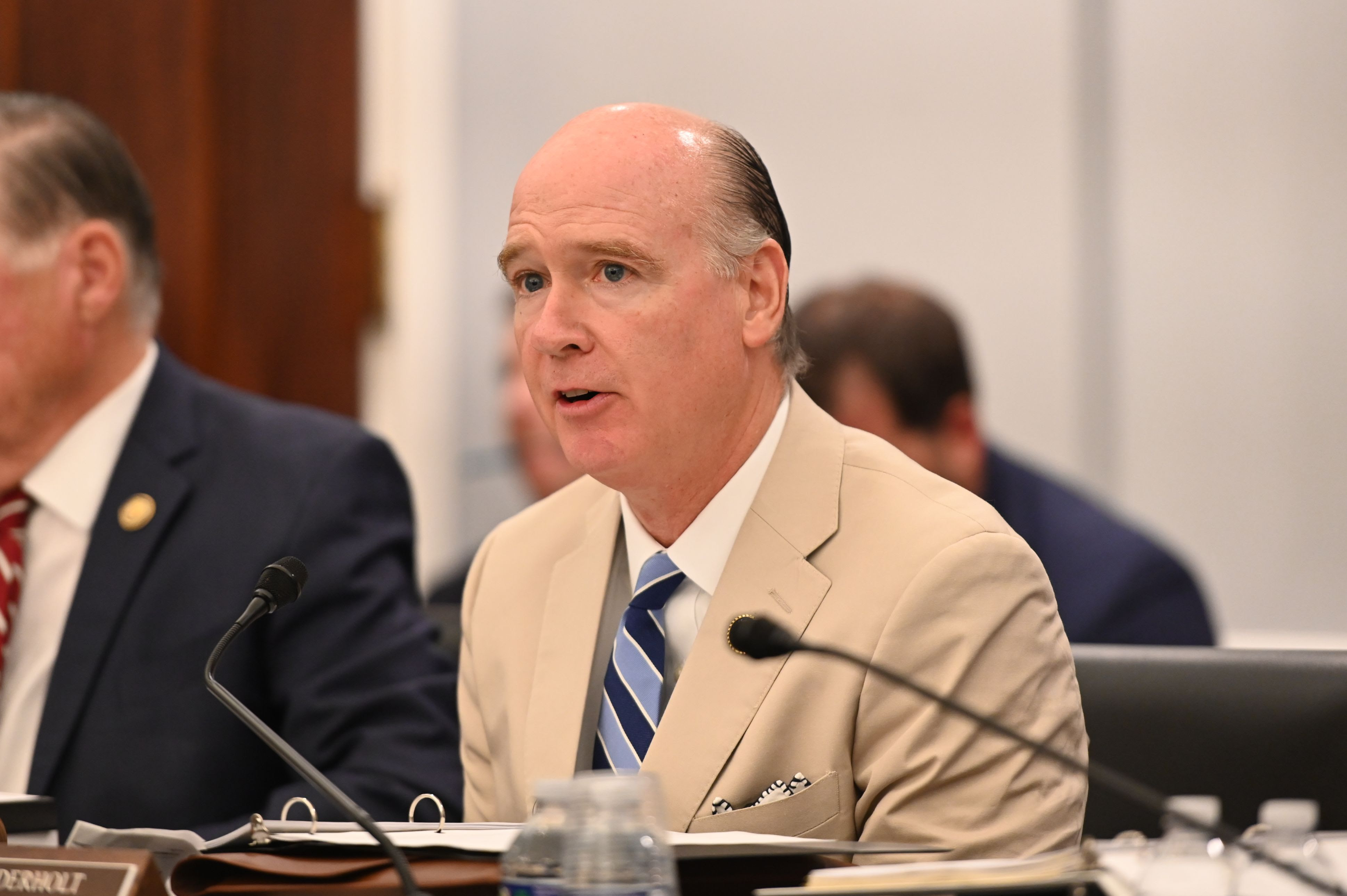
WASHINGTON — Congressman Robert Aderholt and fellow Republicans moved forward with budget cuts to the health and education departments last week, veering from the Senate’s higher proposals and the White House’s call for steeper reductions.
House appropriators on the Labor, Health and Human Services, and Education subcommittee, led by Chairman Aderholt, passed a spending bill allocating $108 billion for HHS, a 6% cut from last year. The full House Appropriations Committee will markup the bill Tuesday.
The House topline number for HHS, though lower than the Senate’s total of $116 billion, is still a far cry from the White House’s earlier proposed cut of more than $30 billion for the health department.
“(We’re) trying to thread the needle where the president will be happy with the bill to sign it, but yet at the same time, trying to get a bill that you can pass through the House and obviously through the Senate,” Aderholt told Alabama Daily News.
For HHS funding, Republicans highlighted more money for rural hospitals and a boost to the Low-Income Home Energy Assistance Program, according to a GOP bill summary. It terminates diversity, equity and inclusion policies. The bill also includes cuts to HIV/AIDS programs and the CDC.
“The president has indicated that he wants a lower number and obviously, we’re trying to cut waste, fraud and abuse, and we’re trying to find that in this bill,” Aderholt told ADN.
Democrats decried the budget and used some of the hearing to air their grievances with the latest shakeup at the CDC and with Health Secretary Robert F. Kennedy, Jr.
“The majority’s bill would harm women’s health, children’s health and public health, surrendering the safety and wellbeing of the American people to multiple health crises,” Rep. Rosa DeLauro, D-CT, the subcommittee’s ranking member, said at the markup.
One health agency that the bill maintains funding for is the National Institutes of Health.
“The good Lord’s given us a lot of cures through the NIH, and so we want to make sure it’s up (and) alive and that it’s doing the work it can do,” Aderholt said.
On the education side, the department could see a 15% budget cut with $67 billion provided for the next fiscal year. The House bill targets funding for Title I grants, provided to schools with a high percentage of low-income students, reducing it to $5.2 billion, a 27% cut.
“We’re wanting to figure out a way … to dismantle the Department of Education and try to make more money going to the states,” Aderholt told ADN. “And so we’re trying to figure out a way to try to take care of the Title I needs, but at the same time, make sure that the money is going to the states and that we can address those needs.”
DeLauro argued those cuts would “take at least 72,000 teachers out of low-income classrooms.”
The plan proposes eliminating funding for English Language Acquisition programs, according to a Democratic fact sheet, which help support English learners.
However, the GOP-led bill maintains funding for Pell Grants and increases funding for special education and charter schools.
It’s unclear if the House bill will become law, as it would also need to pass the Senate. Lawmakers are currently racing to fund the government before current money runs out Oct. 1.
link